If you have ever searched for watering advice, you have probably seen some version of "water once a week." It sounds simple. It is also the single most common reason houseplants die.
The truth is that no fixed schedule works for every plant, every pot, or every room in your home. A pothos in a sunny south-facing window dries out far faster than the same pothos in a dim hallway. A plant in a small terracotta pot needs water more often than one in a large glazed ceramic planter. Seasons change, humidity shifts, and your plant's water needs change with them.
So the real answer to "how often should I water?" is: when the soil tells you it is time. This guide explains exactly how to read those signals.
Why "once a week" is wrong
A watering schedule assumes every week is the same. But your plant's environment is always changing. In summer, longer days and warmer temperatures speed up water consumption. In winter, shorter days and lower light slow it down. Running the heater dries the air. A rainy week raises humidity. Your plant responds to all of these variables in real time, and a fixed schedule cannot keep up.
The result of following a schedule is usually one of two things: overwatering (the top cause of houseplant death) or underwatering. Either way, you are watering according to your calendar instead of your plant's actual needs.
A better approach is learning to check the soil and water only when your plant actually needs it.
The six factors that actually determine watering
1. Light
Plants in bright light photosynthesize faster and use more water. A plant sitting in a south-facing window may need water twice as often as the same species in a north-facing room. If you move a plant to a brighter spot, expect to water more frequently.
2. Pot size and material
A small pot holds less soil and dries out faster. Terracotta is porous and wicks moisture away through its walls, meaning terracotta pots dry out faster than plastic or glazed ceramic. If you repot into a larger container, watering frequency decreases because the larger soil volume holds more moisture.
3. Soil type
Dense, peat-heavy soil holds water for a long time. A chunky mix with perlite, bark, and sand drains fast and dries out sooner. The right soil depends on the plant. Succulents need fast-draining mix. Tropical plants prefer something that holds moderate moisture. If your soil stays wet for more than a week after watering, it is likely too dense for your plant.
4. Humidity and airflow
Dry air (common in heated or air-conditioned rooms) pulls moisture from soil faster. High humidity slows evaporation. A fan or vent blowing on your plant speeds drying. Grouping plants together raises local humidity slightly, which can reduce watering frequency.
5. Season
Most houseplants grow actively in spring and summer and slow down in fall and winter. During the growing season, they drink more. In winter, growth slows and water consumption drops. Many plant owners make the mistake of keeping the same watering routine year-round.
6. The plant itself
Different species have very different needs. A peace lily in the same pot and light as a snake plant will need water far more often. Thin-leafed tropical plants generally use water faster than thick-leafed succulents that store water in their leaves. Knowing your plant's general water preference — dry, moderate, or moist — is essential baseline knowledge.
How to check if your plant needs water
Instead of following a schedule, check the soil. There are three reliable methods, ranging from simple to most accurate.
The finger test
Push your finger about an inch into the soil. If it feels dry at that depth, most plants are ready for water. If it still feels moist, wait. This works for small pots, but it only tells you about the top inch. For medium and large pots, the surface can be dry while the lower soil is still saturated, which is where overwatering happens.
The weight test
Lift the pot. A freshly watered pot is noticeably heavier than a dry one. Over time, you develop a feel for when a pot is light enough to need water. This is surprisingly effective once you are used to it, but it is hard to judge precisely and does not work for large or heavy containers.
Using a soil moisture meter
A moisture meter removes the guesswork entirely. You insert a probe into the soil and get an instant reading of the moisture level deep in the pot, where roots actually absorb water. This is the most reliable method because it measures what is happening at root depth, not at the surface.
This is especially important for medium and large pots. The top two inches can feel bone dry while the bottom third of the pot is still soaking wet. Watering at that point would drown the roots. A moisture meter catches this because the probe reaches several inches into the soil where your finger cannot.
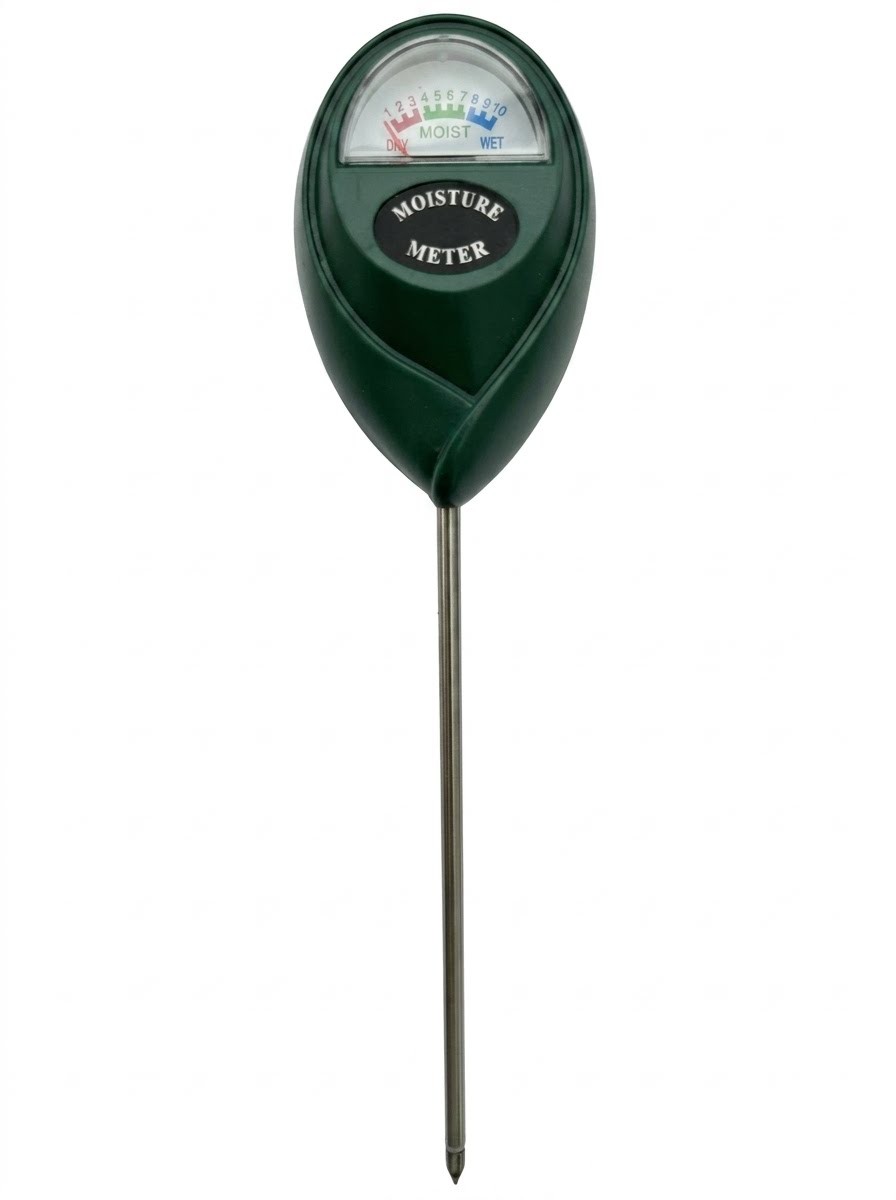
Vanta Grow Soil Moisture Meter
6.75-inch probe reaches deep into root zones. Color-coded dial shows Dry, Moist, or Wet in a glance. No batteries required.
Buy on AmazonWatering guide by plant type
Every plant is different, but these general guidelines give you a starting point. Always confirm by checking the soil before watering.
Succulents and cacti
Let the soil dry out completely between waterings. In summer, this might be every 10 to 14 days. In winter, once a month or even less. These plants store water in their leaves and stems, so they tolerate drought far better than excess moisture. Overwatering is the number one killer. If your moisture meter reads anything above "Dry," wait.
Tropical houseplants (pothos, monstera, philodendron)
Water when the top 1 to 2 inches of soil feel dry. These plants like consistent moisture but not wet feet. A moisture meter reading in the lower end of the "Moist" zone is ideal. In summer with bright light, this might mean watering every 5 to 7 days. In winter, stretch it to 10 to 14 days.
Peace lilies and ferns
These prefer consistently moist (not wet) soil. They are less tolerant of drying out completely. Water when the meter reads at the low end of "Moist" or just entering the "Dry" zone. Peace lilies will dramatically droop when thirsty, but letting them reach that point repeatedly stresses the plant.
Snake plants and ZZ plants
These are drought-tolerant and store water in their thick leaves and rhizomes. Let the soil dry out almost completely between waterings. In winter, watering once every 3 to 4 weeks is often enough. Overwatering is the fastest way to kill these otherwise indestructible plants.
Herbs (basil, mint, rosemary, cilantro)
Most culinary herbs prefer moderate moisture. Basil and mint like it slightly more moist; rosemary prefers drier conditions between waterings. Check soil moisture frequently because herbs in small pots on sunny windowsills dry out fast. Harvesting regularly also increases water needs because the plant is putting energy into regrowth.
Fiddle leaf figs
Notoriously finicky about water. They want thorough, even watering when the top 2 inches dry out, then no water until the soil dries again. They hate sitting in water and they hate drying out completely. A moisture meter is particularly useful here because fiddle leaf figs often sit in large pots where the surface and root zone can be at very different moisture levels.
Signs of overwatering
Overwatering is the most common cause of houseplant death. When roots sit in saturated soil for too long, they cannot absorb oxygen and begin to rot. Early signs include:
- Yellowing lower leaves — often the first visible symptom. The plant redirects resources away from older leaves as roots struggle.
- Soft, mushy stems near the soil line — a sign that rot has begun.
- Soil that stays wet for more than 7 to 10 days — the soil should dry within a week for most plants. If it is not, the pot may lack drainage, the soil may be too dense, or the plant is not getting enough light to use the water.
- Fungus gnats — tiny flies hovering around the soil surface are attracted to consistently moist topsoil. Their presence usually means you are watering too frequently.
- A musty or sour smell from the soil — healthy soil smells earthy. A sour or rotten smell indicates anaerobic conditions from excess water.
If you catch it early, the fix is simple: stop watering and let the soil dry out. In severe cases, you may need to repot into fresh, well-draining soil and trim away rotted roots.
Signs of underwatering
Underwatering is less destructive than overwatering in most cases, because many plants can recover from drought more easily than from root rot. Signs include:
- Wilting or drooping leaves — the most obvious sign. Leaves lose turgor pressure when the plant does not have enough water to keep them firm.
- Dry, crispy leaf edges or tips — especially on tropical plants and ferns. The plant sacrifices its extremities first.
- Soil pulling away from the pot edges — very dry soil shrinks and separates from the container walls. When you do water, it may run down the gap and out the drainage hole without actually reaching the roots.
- Slow or stunted growth — a chronically underwatered plant will stop putting out new leaves.
- Leaves curling inward — some plants curl their leaves to reduce surface area and slow moisture loss.
To fix underwatering, water thoroughly until it drains from the bottom. If the soil has pulled away from the pot, bottom-water by placing the pot in a saucer of water for 20 to 30 minutes so the soil can reabsorb moisture from below.
Key takeaways
Knowing when to water is the single most important factor in keeping plants alive. Here is what to remember:
- There is no universal schedule. "Once a week" ignores every variable that matters.
- Light, pot size, soil type, humidity, season, and plant species all determine how fast soil dries.
- Check the soil before watering, every time. The finger test works for small pots. A moisture meter gives you the full picture for larger ones.
- Overwatering kills more plants than underwatering. When in doubt, wait a day.
- Adjust with the seasons. Most plants need less water in winter than summer.
The best plant parents are not the ones who water on a schedule. They are the ones who check, read the soil, and water only when the plant actually needs it. That one habit prevents most of the problems people struggle with.